Finding the Right Water Treatment Solution for Every Part of Your Home

Water has a way of becoming part of the background. We turn on the kitchen tap, start a load of laundry, take a shower, and get on with the day. It’s only when something goes wrong that we begin to pay attention. White deposits appear around faucets, glasses come out of the dishwasher looking cloudy, or the drinking water develops a taste that nobody in the family particularly likes.
These problems can have different causes, which is why choosing water treatment equipment requires a little investigation. A solution that works well for hard water may not address concerns about drinking water quality, and a filter designed for the kitchen might do very little for mineral buildup throughout the house. Understanding the differences can help you spend wisely and get results that actually matter.
Start With the Water You Have
Before investing in equipment, find out what your water contains. Water quality varies depending on the source, local geology, municipal treatment, and plumbing conditions. Even two neighboring properties can occasionally experience different issues, especially when one relies on a private well and the other receives public water.
Hardness is a common concern. Water containing elevated levels of calcium and magnesium can leave scale on fixtures, reduce soap lather, and contribute to deposits inside appliances. Other concerns, such as sediment, unpleasant odors, or certain dissolved contaminants, may require entirely different treatment methods.
A water test helps separate genuine problems from assumptions. Municipal water customers can start by reviewing their supplier’s water quality report. Homeowners using private wells should arrange appropriate laboratory testing, since groundwater conditions may change over time.
Testing is particularly important when health-related contaminants are a concern. Clear appearance and a neutral smell don’t guarantee that water is safe to drink. Choose treatment based on reliable results rather than a product’s broad promise to improve water quality.
Understanding the Benefits of Water Softeners
If hard water is the main issue, water softeners may be worth considering. Most conventional systems use a process called ion exchange, in which resin beads capture calcium and magnesium and release other ions, commonly sodium, into the water.
The reduction in hardness can make everyday chores more manageable. Soap and shampoo may lather more easily, while mineral deposits can become less troublesome around showerheads, taps, and water heaters. Some homeowners also find that they spend less time scrubbing scale from bathroom surfaces.
Softening can help protect plumbing and appliances from the effects of hard-water deposits, although it doesn’t eliminate every possible cause of equipment wear. Appliance performance also depends on maintenance, water temperature, usage, and the manufacturer’s recommendations.
There’s one important distinction to understand: a water softener is not a complete drinking water purification system. It primarily targets hardness minerals and isn’t designed to remove every contaminant. Depending on the equipment and household circumstances, softened water may also contain more sodium than the original supply. People following a medically prescribed sodium restriction should discuss their water options with a healthcare professional.
The best system size depends on water hardness, household consumption, and peak demand. A unit that’s too small may regenerate frequently, while an unnecessarily large model could cost more than needed. A qualified water treatment professional can help determine the appropriate capacity.
Improving the Water You Drink
Water used for drinking and cooking deserves its own consideration. Even when the water supplied to a home meets applicable drinking water standards, people may still want to address taste, odor, or specific substances identified through testing.
Modern drinking water systems range from simple carbon filters to more advanced technologies such as reverse osmosis. Activated carbon can reduce certain taste- and odor-causing compounds, while reverse osmosis can reduce many dissolved substances when the system is properly designed and maintained. Different products have different capabilities, so it’s important to check what the exact model is certified to reduce.
An under-sink system is a popular option because it treats water at a convenient point of use without requiring filtration of every gallon entering the property. Some households prefer countertop units, while others choose a refrigerator filter or a whole-house solution depending on their needs.
Replacement schedules matter. Filters can lose effectiveness when they reach the end of their service life, and neglected components may affect water flow or treatment performance. Follow the manufacturer’s recommendations and replace cartridges on time.
If you’re concerned about a particular contaminant, look for independently verified performance claims that specifically address it. A filter described as suitable for drinking water isn’t automatically effective against every potential health hazard.
When Whole-House Treatment Is the Better Fit
Sometimes, the issue affects more than one faucet. Perhaps scale forms throughout the plumbing, sediment enters several fixtures, or testing identifies a water characteristic that requires treatment before water is distributed around the property.
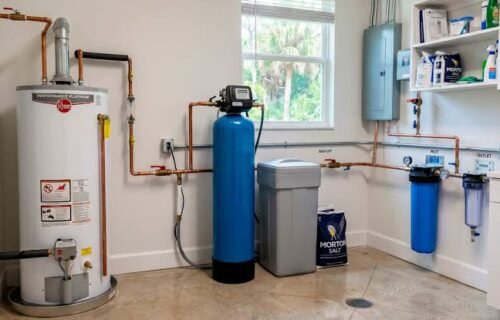
In these situations, whole house specialty systems may offer a more suitable approach. These systems are designed to treat water as it enters the home or to address particular water quality challenges at a broader scale. Depending on the problem, the setup might include sediment filtration, carbon treatment, iron reduction, or other specialized media.
The key word is specialty. Different systems are built for different water conditions, and adding equipment without understanding the underlying issue can lead to disappointing results. For example, a sediment filter may capture visible particles but won’t necessarily remove dissolved minerals. Likewise, a standard softener may reduce hardness without addressing an iron problem adequately.
A proper assessment should consider the water source, test results, household flow rate, and the number of bathrooms or appliances in use. Equipment must be able to supply enough treated water during busy periods, such as mornings when several people are getting ready for work or school.
Whole-house systems also require space and suitable plumbing connections. Some need drainage, electricity, or regular replenishment of treatment materials. Before installation, ask the supplier to explain these requirements and provide a clear maintenance plan.
Compare Long-Term Costs, Not Just Purchase Prices
It’s tempting to choose the cheapest system available, particularly when several products appear to offer similar benefits. But the initial price is only one part of the decision.
Consider installation, replacement filters, salt, electricity, wastewater where applicable, and routine servicing. Ask how easily replacement components can be purchased and whether the supplier provides local technical support. A less expensive unit may become costly if its parts are difficult to find or it requires frequent professional attention.
Check certifications and performance documentation carefully. Independent standards can help verify specific treatment claims, but certification to one standard doesn’t mean a product addresses every water quality concern.
It’s also sensible to ask for a written quotation that separates equipment costs from installation and ongoing expenses. That makes comparisons more meaningful and reduces the chance of unexpected charges later.
Make Water Treatment Part of Home Care
Once a system is installed, a little routine attention goes a long way. Check for leaks, follow the recommended service schedule, and monitor changes in taste, water pressure, or scale formation. If something seems different, investigate rather than assuming the equipment will correct itself.
Water treatment doesn’t have to be complicated. The most effective approach is usually the one based on accurate testing, suitable equipment, and realistic expectations. A softener can address hardness, a drinking water filter can target specific concerns at the tap, and specialized whole-house equipment can manage broader problems when the water calls for it.
Start with the facts, compare the options, and choose a system that suits your household rather than chasing every available feature. When treatment matches the actual water conditions, the benefits are easier to understand, maintain, and appreciate over time.