Choosing the Right Water Heater Starts With How Your Home Actually Uses Hot Water
Hot water is easy to take for granted. You turn on the shower, wait a few seconds, and expect warmth. You wash dishes, run the washing machine, fill a bathtub, and rarely stop to consider what makes all of that possible. That changes quickly when the water heater starts making strange noises or the shower turns cold halfway through.
Replacing a water heater isn’t a decision most homeowners make for fun. It can be expensive, disruptive, and surprisingly confusing. There are different sizes, fuel types, efficiency ratings, installation requirements, and technologies to consider. The good news is that you don’t need to become a plumbing expert to make a sensible choice.
You simply need to understand what your household actually needs.
Start With Your Daily Routine
Before comparing brands or reading efficiency labels, think about how hot water is used in your home.
How many people live there? Do several family members shower around the same time? Is someone regularly washing dishes while another person is doing laundry? Do you have a large bathtub that gets used often?
These details matter because hot-water demand isn’t the same in every household.
A couple living in a smaller home may have very different needs from a family of six. Choosing equipment based solely on the size of the house can therefore be misleading. The number of occupants and their habits are often more important.
That’s one reason tankless water heaters have attracted so much attention. Instead of storing a large quantity of heated water, they heat water as it passes through the unit. This can save space and reduce standby energy losses, but the system still needs to be properly sized for the home’s peak demand.
Traditional Tanks Still Have Plenty Going for Them
Newer technology tends to get most of the attention, but traditional systems haven’t disappeared—and there’s a good reason.
Conventional water heaters store heated water in a tank, keeping it available when a faucet or shower calls for it. They’re familiar, widely supported, and generally straightforward for plumbers to install and service.
The upfront cost can also be lower than some tankless installations. For homeowners working within a strict renovation budget, that’s a significant consideration.
The downside is that stored water eventually runs out. If everyone showers one after another on a busy morning, the last person might be left wondering why their “hot” shower feels more like an outdoor camping experience.
Storage tanks also use energy to maintain water temperature, even during periods when nobody is using hot water.
Tankless Isn’t Automatically the Better Choice
It’s tempting to assume that newer means better. It doesn’t always work that way.
Tankless systems can be highly efficient, compact, and convenient, but they can also have higher installation costs. Depending on the model and fuel source, a home may require electrical upgrades, larger gas lines, updated venting, or other modifications.
There’s also a flow-rate consideration. A tankless heater has a maximum amount of water it can heat at a given temperature rise. If several high-demand fixtures operate simultaneously, the unit may struggle unless the system has been designed for that situation.
That doesn’t make tankless technology a poor choice. It simply means the equipment needs to match the household.
Water Quality Can Affect Heater Performance
Water quality is another part of the equation that often gets overlooked.
Hard water contains minerals, particularly calcium and magnesium, that can leave scale inside plumbing fixtures and appliances. Over time, mineral deposits can affect heating equipment and contribute to reduced efficiency.
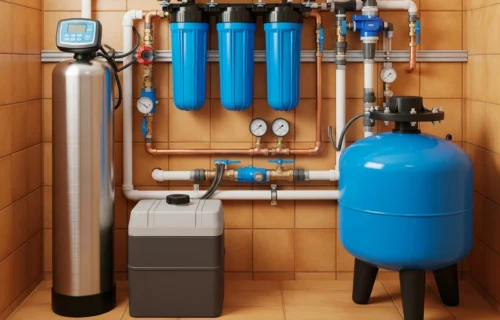
In homes with significant hardness, water softeners may help reduce the minerals responsible for scale. A properly selected and maintained softening system can also benefit other water-using appliances around the property.
Before investing in treatment equipment, though, test the water. Guessing about water quality can lead to unnecessary spending. A water analysis can help determine whether hardness is actually a concern and whether additional filtration or treatment is appropriate.
It’s a little like checking the engine before replacing the tires. You want to know what you’re dealing with first.
Don’t Judge a Heater by the Purchase Price
The price on the box isn’t the full cost.
Installation, fuel consumption, maintenance, repairs, replacement parts, and expected service life all contribute to what you’ll spend over the years.
A less expensive water heater might make sense for someone planning to move soon. A more efficient system may be worth considering for a homeowner expecting to stay for a decade or longer.
You should also consider what happens if the system needs a specialized repair. A technology that requires uncommon components or specialized servicing may have different long-term costs from a conventional system with widely available parts.
A good comparison looks at the total ownership picture rather than one attractive number.
Space Can Change the Decision
Storage space is easy to overlook until you’re trying to squeeze a water heater into a cramped utility room.
Traditional tanks need enough floor space and clearance for installation and servicing. Tankless models are generally more compact and can often be wall-mounted, which may free up valuable room.
That can matter in apartments, smaller homes, renovated basements, or utility closets where every square foot has a purpose.
Still, compact doesn’t mean installation is effortless. The location needs to provide suitable connections, ventilation where required, drainage considerations, electrical access, and enough room for future service.
Maintenance Is Part of Owning the System
No water heater should be considered completely maintenance-free.
Tank systems may need periodic flushing to reduce sediment accumulation. Components such as anode rods can also require inspection depending on the system and water conditions.
Tankless units may need descaling, particularly in areas with hard water. Filters and connections should also be checked according to manufacturer recommendations.
Maintenance isn’t particularly exciting. Nobody wakes up thinking, “Today feels perfect for inspecting the water heater.” But regular attention can help identify problems before they become expensive failures.
Watch for the Warning Signs
Water heaters usually give some indication when something isn’t right.
Rust-colored water, unusual rumbling or popping sounds, inconsistent temperatures, visible leaks, corrosion, or a noticeable decline in hot-water availability are all reasons to investigate.
A small amount of moisture around a heater shouldn’t automatically be dismissed as condensation. Depending on where the water is coming from, it could signal a leaking valve, connection, pipe, or tank.
If a heater is older and showing multiple warning signs, planning a replacement may be wiser than waiting for a complete failure. An emergency replacement tends to leave homeowners with fewer choices and more pressure to decide quickly.
Professional Installation Makes a Difference
Even the best equipment can perform poorly if it is installed incorrectly.
Proper sizing, connections, temperature settings, venting, pressure management, and safety controls all matter. Professional installation can also help ensure the system meets applicable building and safety requirements.
A qualified technician can evaluate your current setup before recommending equipment. That’s especially important when switching from one type of heater to another.
Instead of asking, “What’s the best water heater?” a better question is, “What’s the best water heater for this home?”
The difference sounds small, but it can save you from buying equipment that doesn’t fit your actual needs.
A Practical Choice Beats a Trendy One
Choosing a water heater is ultimately about balance. Efficiency matters, but so do installation costs. Convenience matters, but so does capacity. New technology can be excellent, but traditional equipment can still be the smartest option in the right home.
Think about your household’s hot-water habits, water quality, available space, budget, and long-term plans. Consider maintenance before installation, not after something breaks.
Most importantly, don’t let marketing make the decision for you.
A water heater doesn’t need to be the most advanced model on the market. It needs to deliver dependable hot water safely, efficiently, and consistently for the people living in the house.
When you choose based on how your home actually works—not simply on what happens to be popular—you’re far more likely to end up with a system you’ll be happy with for years.