When Hard Water Becomes a Daily Nuisance, It May Be Time to Take a Closer Look
Most homeowners don’t wake up thinking about the mineral content of their water. They’re thinking about breakfast, getting the kids ready, finding the car keys — normal stuff. Water quality usually stays somewhere in the background.
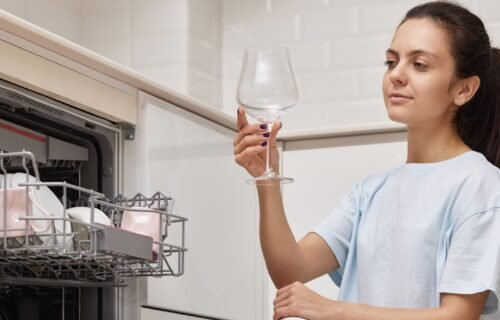
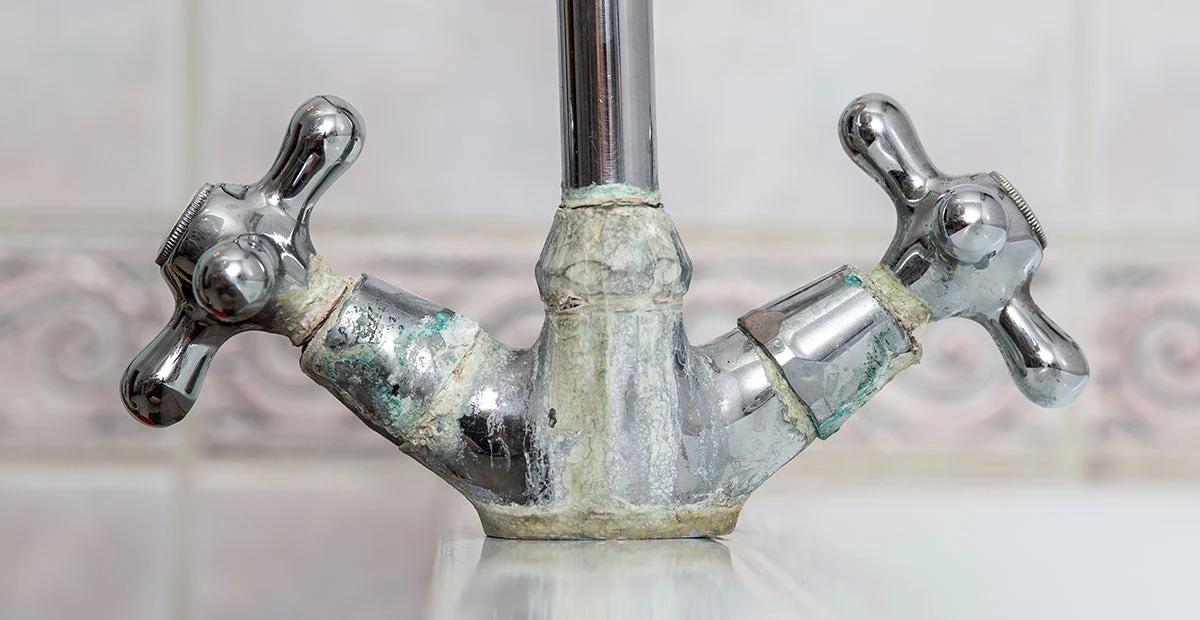
Then the shower door develops cloudy marks. The kitchen faucet gets a chalky ring. Glasses come out of the dishwasher looking less than sparkling. Soap seems strangely difficult to rinse away. None of these things is a disaster, but together they can become a persistent irritation.
Often, the culprit is hard water.
Hard water isn’t necessarily dangerous, and in many homes it’s more of a maintenance headache than a health concern. Still, if you’ve been scrubbing the same mineral stains every Saturday morning, it’s worth understanding what’s happening and what can actually be done about it.
What Makes Water Hard?
Water becomes hard when it contains higher levels of naturally occurring minerals, particularly calcium and magnesium. These minerals are picked up as water travels through soil and rock before reaching a well, reservoir, or other water source.
The amount varies considerably from one location to another. Two homes only a few miles apart can sometimes experience noticeably different water conditions.
You may not taste hardness directly, but its effects can be pretty obvious. Water spots, mineral deposits, stiff-feeling laundry and reduced soap performance are common signs.
The important thing is not to assume every water problem comes from hardness. Testing is the best way to confirm what’s actually in the water.
Why Hard Water Can Feel So Annoying
One of the reasons hard water problems are so frustrating is that they rarely arrive as one big event. Instead, they’re a collection of small problems that slowly become part of everyday life.
You clean the faucet today, and the white residue returns a few days later. You wash the shower walls, then notice another cloudy film. You use more soap because it doesn’t seem to lather properly.
Over time, those little inconveniences can make the whole house feel harder to maintain.
Hard water can also affect water-using appliances. Heating water encourages minerals to precipitate and form deposits, which may accumulate inside water heaters and other equipment. The extent of the impact depends on water hardness, temperature, usage, equipment design, and maintenance.
It’s not something that happens overnight. That’s precisely why it can be easy to overlook.
The Story Behind Those White Deposits
If you’ve ever wondered why a clean faucet suddenly develops a crusty white edge, you’re seeing mineral deposits.
As water evaporates, calcium and other minerals can remain behind. Repeated exposure creates deposits that become increasingly noticeable.
This scale buildup is especially common around faucets, showerheads, kettles, coffee equipment and other places where water is heated or frequently evaporates.
A little scale might look harmless, and sometimes it is mostly cosmetic. But heavier deposits can interfere with water flow or reduce the efficiency of certain equipment.
Once deposits become established, removing them can require considerably more effort than preventing them in the first place.
What Water Softeners Actually Do
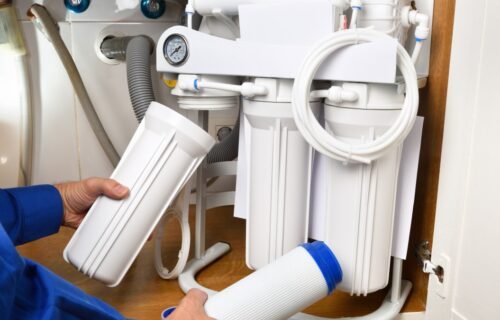
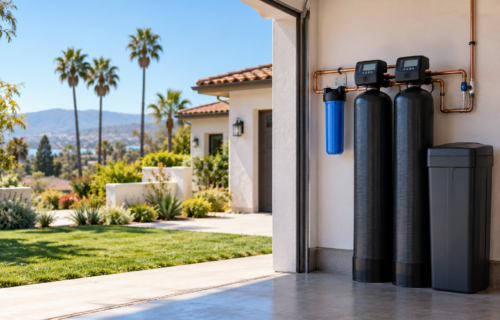
If testing confirms that hardness is a significant concern, a water softening system may be worth considering.
Water softeners are designed to reduce hardness minerals in water, typically through an ion-exchange process. The system exchanges calcium and magnesium ions for other ions, commonly sodium or potassium, depending on the setup.
The result is water with lower hardness, which can help reduce mineral deposits throughout the plumbing system.
Many homeowners notice the difference in everyday tasks. Soap may lather more easily. Glassware can come out cleaner. Fixtures may require less frequent scrubbing.
However, a softener isn’t a universal filter. It isn’t designed to remove every possible contaminant or solve every water-quality concern. That’s why testing and proper system selection matter.
Your Water Heater Deserves Attention
Water heaters are particularly relevant when discussing hard water because heating can encourage mineral deposits to form.
Over time, sediment and scale can accumulate inside the tank or on heating components. In some situations, these deposits may contribute to reduced efficiency or unusual noises.
The actual effect depends on the equipment and water conditions, so it’s not sensible to assume every hard-water home will experience the same issue.
Still, if you’re already seeing heavy mineral deposits around faucets and fixtures, it may be worth asking whether your water heater and other appliances are receiving the same treatment.
Preventive maintenance is usually easier than dealing with an expensive equipment failure later.
Hard Water and Cleaning
There’s another side to hard water that homeowners notice almost immediately: cleaning.
When soap reacts with calcium and magnesium, it can leave behind residue. This may appear on shower walls, sinks, bathtubs and other surfaces.
Laundry can be affected too. Clothes may feel less soft or look dull over time, particularly when detergent isn’t performing as effectively as it should.
Many people respond by simply using more cleaning products. That can help to a point, but it doesn’t address the underlying water condition.
Sometimes the better solution is to deal with the hardness itself rather than continuously fighting the symptoms.
Don’t Choose Equipment Based on Guesswork
It’s easy to walk into a store or browse online and find dozens of systems that claim to solve hard water.
The challenge is figuring out which one actually fits your home.
Start with a water test. Understand the hardness level and identify whether other water-quality concerns are present. Then consider household size, water usage, plumbing configuration and available installation space.
It’s also smart to ask about maintenance. How often will the system need service? What consumables are required? How much salt or other material will it use? What happens if the equipment needs repair?
A good treatment system should be manageable after installation, not a mystery sitting in the basement.
Maintenance Makes a Difference
Even the best softening equipment needs routine care.
Depending on the system, that may involve replenishing salt or potassium chloride, checking settings, cleaning components, inspecting valves, and replacing parts when necessary.
Modern systems may automate much of the process, but they still benefit from occasional professional inspection.
Ignoring maintenance can affect performance and may shorten equipment life. A few minutes spent checking the system regularly can be much cheaper than discovering that it hasn’t been working properly for months.
Look Beyond the Immediate Problem
Reducing hardness isn’t only about getting rid of white spots on the kitchen faucet.
It can also be about making everyday maintenance easier, protecting water-using equipment, and improving the overall experience of using water around the house.
That doesn’t mean every home needs a softener. Some properties have relatively mild hardness, while others have much more significant mineral content.
The right decision depends on the actual water conditions and what matters most to the household.
A Cleaner Routine Starts With Understanding the Water
Hard water is one of those household problems that can seem insignificant until you’ve dealt with it for years. The stains, residue, extra cleaning and appliance concerns slowly add up.
The good news is that it’s usually a manageable issue once you know what you’re dealing with.
Test the water first. Understand the hardness level. Look at the needs of your home and equipment, then choose treatment accordingly.
A water softener may be the right answer for one property, while another may need a completely different approach. What matters is avoiding guesswork.
Good water treatment isn’t about buying the biggest system available. It’s about solving the right problem, maintaining the equipment and making everyday life a little less frustrating. And honestly, if your Saturday mornings could use fewer mineral stains and less scrubbing, that’s a pretty worthwhile improvement.