What to Know Before Installing a New Water Treatment System
There’s something reassuring about turning on a tap and knowing the water will look, smell, and taste the way you expect. We tend not to think about it much until that changes. A glass of water tastes odd. White residue starts appearing around the faucets. The shower leaves behind stubborn spots, or an appliance seems to be collecting scale faster than it used to.
Those everyday annoyances can be signs that your home’s water quality needs a closer look.
Choosing a water treatment system isn’t simply about finding a machine with impressive specifications. The right solution depends on the water entering your property, the problems you want to address, how much water your household uses, and how willing you are to maintain the equipment over time. A little planning before installation can save plenty of money and frustration later.
Begin With the Water Itself
Before choosing equipment, find out what you’re trying to treat.
Water can contain hardness minerals, sediment, iron, chlorine, unpleasant odors, and other substances. Private well water can have a very different profile from municipal water, and even neighboring properties may experience different conditions.
A professional water test can provide a useful starting point. Instead of guessing whether you need a softener, carbon filter, sediment filter, reverse osmosis system, or another technology, you can make the decision based on actual water conditions.
This matters because no treatment technology does everything. A system designed to reduce hardness isn’t necessarily intended to handle every contaminant, and a drinking-water filter isn’t automatically a whole-house solution.
Think About Where You Need Treated Water
Once you understand the water, consider how your household uses it.
If the main concern is drinking and cooking, a point-of-use system in the kitchen might be enough. If water-quality problems affect showers, laundry, appliances, and every faucet in the house, a whole-home approach could make more sense.
This is where system installation becomes more than simply putting equipment in place. Proper installation should account for water flow, available space, plumbing configuration, drainage, electrical requirements where applicable, and the manufacturer’s specifications.
A system can be excellent on paper and still perform poorly if it’s installed incorrectly. That’s why installation quality deserves just as much attention as the equipment itself.
Choose Technology for the Actual Problem
Water treatment can involve several different technologies, and each has its own role.
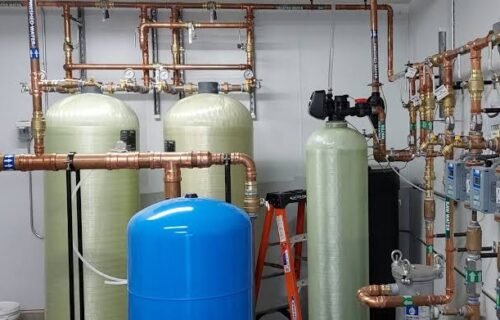
Water softeners are generally used to address hardness caused by minerals such as calcium and magnesium. Sediment filters can capture particles before they travel through the plumbing system. Activated carbon filtration is commonly used to improve taste and odor and reduce certain substances.
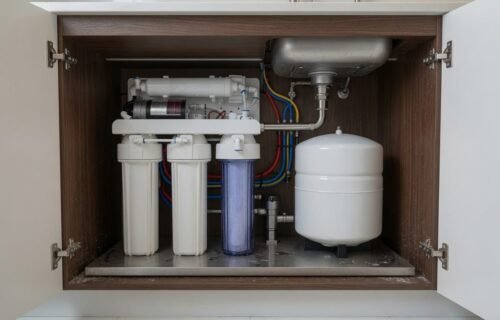
Reverse osmosis is another option, particularly for drinking water. It uses a semipermeable membrane to reduce a range of dissolved substances. However, it also has specific installation and maintenance requirements.
The lesson is pretty straightforward: don’t buy technology just because it sounds advanced. Buy it because it makes sense for your water.
Installation Should Include More Than the Equipment
A professional installation should leave you with more than a functioning tank or filter housing.
You should understand what the system does, what it doesn’t do, and what basic maintenance will be required. Someone should also explain important controls and settings so you aren’t left staring at a control panel six months later wondering what the blinking light means.
The installation area matters too. Equipment needs adequate space for future filter replacement, inspection, and repairs. Drain lines and connections should be properly configured, and the system should be accessible enough for routine service.
It may seem like a small thing now, but accessibility becomes very important later.
Maintenance Is Part of the Purchase
One of the biggest mistakes homeowners make is treating water treatment equipment as a one-time purchase.
It isn’t.
Filters eventually need replacing. Softener systems require attention to salt and regeneration settings. Reverse osmosis systems have components that need periodic replacement. Valves, connections, tanks, and controls may also require inspection as equipment ages.
Good service & maintenance keeps the system performing closer to its intended level and can help identify developing problems before they turn into major repairs.
Before buying, ask what maintenance is required and how often. Find out which tasks you can reasonably handle yourself and which should be performed by a trained technician.
The more clearly you understand those responsibilities upfront, the easier ownership becomes.
Consider the Long-Term Cost
The initial price is only one part of the financial picture.
A system may require replacement cartridges, membranes, salt, electricity, professional servicing, or occasional repairs. Water usage can also vary depending on the technology and system design.
When comparing options, look at the expected cost over several years rather than focusing entirely on the purchase price. A cheaper system isn’t necessarily the better bargain if its consumables are expensive or its components need frequent replacement.
On the other hand, paying for features you don’t need isn’t smart either. The goal is value, not simply spending more.
When an Older System Should Be Replaced
Sometimes homeowners hold onto old treatment equipment because it still technically works. That’s understandable. If something isn’t broken, why replace it?
But age can change the equation.
Older equipment may become less efficient, replacement parts can become harder to find, and repeated repairs can eventually cost more than upgrading. If your water quality has changed or your household’s needs are different from when the original system was installed, the existing setup may no longer be the right fit.
A trade-in / upgrade option may be worth discussing if you’re replacing older equipment. Depending on the provider and system, there may be opportunities to receive value for existing equipment while moving to newer technology.
The important thing is to compare the actual numbers rather than assuming replacement is always better.
Pay Attention to Water Pressure
Water pressure is another factor that shouldn’t be overlooked.
Some treatment systems can affect flow if they’re undersized, poorly maintained, or operating with a clogged filter. If your home already has marginal pressure, adding equipment without considering the plumbing layout can create an unpleasant experience.
A proper assessment should consider household demand and peak usage. A system that works perfectly for two people may not be suitable for a larger family using multiple fixtures at once.
Sizing matters more than many people realize.
Don’t Ignore the Service Plan
Even the best equipment can eventually need attention. That’s why it’s worth understanding who will help if something goes wrong.
Ask about warranty coverage, replacement parts, emergency service, routine inspections, and technician availability. You don’t want to discover after installation that getting support requires weeks of waiting or shipping equipment across the country.
A reliable service relationship can be just as valuable as the equipment itself.
The Right System Should Make Life Easier
Good water treatment should simplify everyday life, not create another complicated chore.
The process starts with understanding your water. From there, choose technology that addresses the actual problem, make sure the equipment is correctly sized, and have it professionally installed when the job requires specialized knowledge. Then keep up with the relatively simple maintenance that protects your investment.
There’s no universal “best” water treatment system. The best system is the one that fits your water, your home, your budget, and your expectations.
Take the time to make that choice carefully. A well-planned installation won’t necessarily be something you think about every day—and that’s probably the best outcome of all. When the water simply works, tastes good, and behaves the way it should, you can get on with everything else that matters.