Choosing Between Water Softeners, Whole-Home Filtration, and Reverse Osmosis
Water problems rarely announce themselves in a dramatic way. More often, they show up as a stubborn white ring around the faucet, a shower door that never seems to stay clean, or drinking water that tastes just a little off. Over time, these small frustrations can become part of the daily routine. The good news is that many common water concerns can be addressed with the right treatment approach—but choosing the right equipment matters.
Water softeners, whole-home filters, and reverse osmosis systems all serve different purposes. They are sometimes discussed as though they are interchangeable, but they aren’t. Understanding how each works can help homeowners avoid unnecessary purchases and build a water-treatment setup that actually fits their needs.
Start by Understanding Your Water
Before choosing a system, it’s worth finding out what you’re dealing with. Water quality can vary based on the source, local geology, plumbing conditions, and treatment practices. A home connected to a municipal supply may have different concerns from one using a private well.
Some issues are easy to notice. Hard water may leave scale on fixtures, while sediment can cause cloudiness or clog screens. Chlorine may affect taste or smell. Other contaminants, however, may not be visible, which is why appropriate testing is often more useful than relying on appearance alone.
A water-quality assessment can help identify whether the main concern is hardness, sediment, taste, odor, or a specific contaminant. Once the problem is clear, it becomes much easier to decide whether you need one treatment method or a combination.
What Water Softener Systems Actually Do
For households dealing with mineral buildup, water softener systems can be a practical solution. Traditional ion-exchange softeners reduce calcium and magnesium, the minerals primarily responsible for water hardness.
The effects are often noticeable in everyday chores. Soap may lather more easily, laundry can feel different, and mineral deposits may become less troublesome. Softening may also help reduce scale accumulation in water heaters and other appliances, although results depend on the equipment, water conditions, and existing buildup.
A softener isn’t a general-purpose purifier. It doesn’t automatically remove every contaminant, and it isn’t designed primarily to improve all aspects of drinking-water quality. Homeowners should consider the system’s capacity, salt usage, regeneration cycle, installation requirements, and ongoing maintenance before making a decision.
For some homes, a softener is all that’s needed to address the main complaint. For others, it may be one part of a larger treatment plan.
When Whole-Home Water Filtration Makes Sense
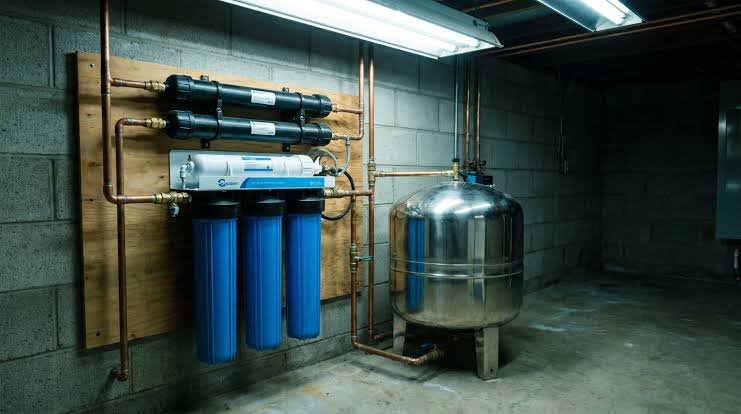
If the goal is to improve water throughout the house, whole-home water filtration may be worth considering. These systems are generally installed at the main water entry point, so treated water can flow to multiple fixtures rather than just one faucet.
Depending on the technology used, whole-home filters may reduce sediment, chlorine, odors, and certain other impurities. Some systems use activated carbon, while others combine multiple filtration stages to address specific water conditions.
This approach can be useful for households that want more than improved drinking water. Water used for showers, laundry, and cleaning may also benefit from filtration when the incoming supply contains noticeable sediment or odors.
Still, homeowners should read the performance specifications carefully. A filter designed to reduce chlorine won’t necessarily remove hardness minerals, bacteria, or every dissolved contaminant. The phrase “whole-home” describes where the system is installed—not a guarantee that it handles every water-quality issue.
Understanding Reverse Osmosis
Reverse osmosis is another popular treatment option, particularly for drinking and cooking water. A reverse osmosis system uses pressure to move water through a semipermeable membrane, reducing many dissolved substances and impurities.
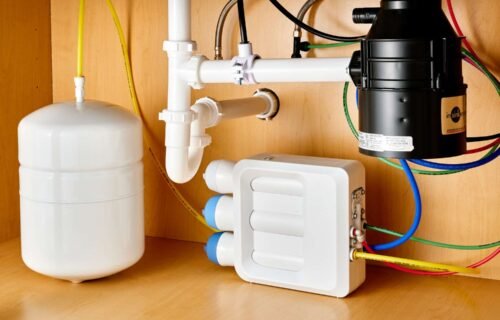
Most residential systems include several stages of treatment. Sediment and carbon filters may protect the membrane, while a final filter can help polish the treated water before it reaches the faucet. Some systems also use a storage tank to provide water when needed.
RO can be useful when homeowners want to improve taste or reduce specific dissolved contaminants. However, it is generally a point-of-use solution rather than a whole-house treatment method. It may also produce some wastewater and requires regular filter and membrane replacement.
The most important consideration is performance against the contaminants that matter in your water. Look for reliable product information and relevant certifications rather than choosing a system simply because it promises “pure water.”
Do You Need One System or More Than One?
This is where understanding the problem becomes especially valuable. A household with hard water and chlorine taste may benefit from a softener combined with carbon filtration. A home with a private well might need sediment removal, iron treatment, or microbial disinfection depending on test results.
In some cases, a whole-home filter can handle the primary concern, while an under-sink RO system provides additional treatment for drinking water. In other situations, a softener may be paired with filtration to address both scale and taste.
There is no universal combination that works for every property. Installing more equipment isn’t automatically better. Each additional system adds installation costs, maintenance responsibilities, and replacement expenses. The goal should be effective treatment—not a complicated setup that looks impressive but solves very little.
Installation and Maintenance Matter
Even the right equipment needs to be installed correctly. Water pressure, plumbing layout, drainage, electrical requirements, and available space can all affect how a system performs. Professional installation may help prevent leaks, incorrect connections, and avoidable operating problems.
Maintenance is just as important. Filters need replacement, softeners may require salt and periodic servicing, and RO membranes have a limited service life. Ignoring these tasks can reduce performance and increase the chance of problems.
Before buying, ask about the full ownership experience. How often do filters need changing? What do replacement parts cost? Is servicing available locally? What happens if water pressure drops or the system stops working?
These details may not be as exciting as the equipment’s features, but they matter in the long run.
Making a Choice That Fits Your Home
The right water-treatment solution begins with a clear understanding of your water and your priorities. Do you want to reduce scale? Improve taste? Treat water at every fixture? Address a specific contaminant? The answer will guide the technology you need.
Start with testing where appropriate, compare systems based on verified capabilities, and ask questions before committing. A reputable water-treatment professional should explain what a system can do, what it cannot do, and what maintenance it will require.
Water softeners, whole-home filters, and reverse osmosis systems can each play a useful role. The smartest approach isn’t necessarily choosing the most advanced option—it’s choosing the one that addresses the actual problem. When the equipment matches the water, everyday improvements can be surprisingly noticeable, from cleaner fixtures to better-tasting water at the kitchen sink.