Choosing the Right Water Filtration Approach for a Better Home
Water is easy to take for granted. You turn on the tap, fill a glass, rinse some vegetables, and carry on with the day. It’s only when the water starts tasting strange, leaving spots on dishes, or creating an odd smell in the shower that you stop and wonder what’s really going on.
The thing is, water quality isn’t always obvious from appearance alone. Clear water can still contain minerals, sediment, chlorine, metals, or other unwanted substances. And a problem that looks like “bad water” might actually be related to plumbing, an aging filter, or the condition of a private well.
That’s why choosing a treatment system should begin with understanding the water, not browsing the biggest list of features.
Good Water Treatment Starts With the Problem
There isn’t one filter that solves every water-quality issue. Different treatment technologies are designed for different purposes, and using the wrong one can be an expensive exercise in frustration.
For some households, filtration solutions for better water quality may be primarily about reducing sediment and improving taste. For others, the priority could be managing hard water, iron, unpleasant odors, or a specific contaminant identified through testing.
This distinction matters. A sediment filter, for example, is designed to capture physical particles. Activated carbon can help with certain taste and odor concerns. Water softeners are intended mainly for hardness minerals. More specialized systems are available when testing identifies a particular water-quality challenge.
In short, the best solution is the one that matches the actual water problem.
Pay Attention to the Clues Around Your Home
Your house may already be giving you useful information.
White scale around faucets often points toward mineral-heavy water. Orange staining can be associated with iron. Cloudy water may contain suspended sediment, although cloudiness can have other causes too. A sudden change in taste or smell might come from the water source, plumbing, or treatment equipment.
Even the dishwasher can become a reluctant detective. Spots on glasses, residue on dishes, or a dull-looking finish may suggest that the water chemistry is affecting cleaning.
None of these signs should be treated as a definitive diagnosis. They’re clues.
If a problem keeps returning after cleaning, replacing a faucet aerator, or changing a filter, that’s usually a good reason to investigate further rather than simply living with it.
Testing Gives You Something Solid to Work With
Water testing isn’t particularly glamorous. Nobody gets excited about collecting a sample and sending it to a laboratory.
Still, it’s one of the smartest steps you can take before investing in treatment equipment.
Depending on the source and testing package, analysis may examine factors such as hardness, pH, iron, manganese, bacteria, dissolved solids, sediment, or other contaminants. Private-well owners should be especially attentive because groundwater conditions can change over time.
Testing also prevents a common mistake: treating a symptom instead of the cause.
Suppose your water leaves orange stains. You might assume a standard filter is enough, only to discover later that the type and concentration of iron require a different treatment method. A test can make the conversation much more precise.
When Whole-Home Treatment Makes Sense
If water problems affect nearly every fixture, a filter under the kitchen sink may not feel like much of a solution.
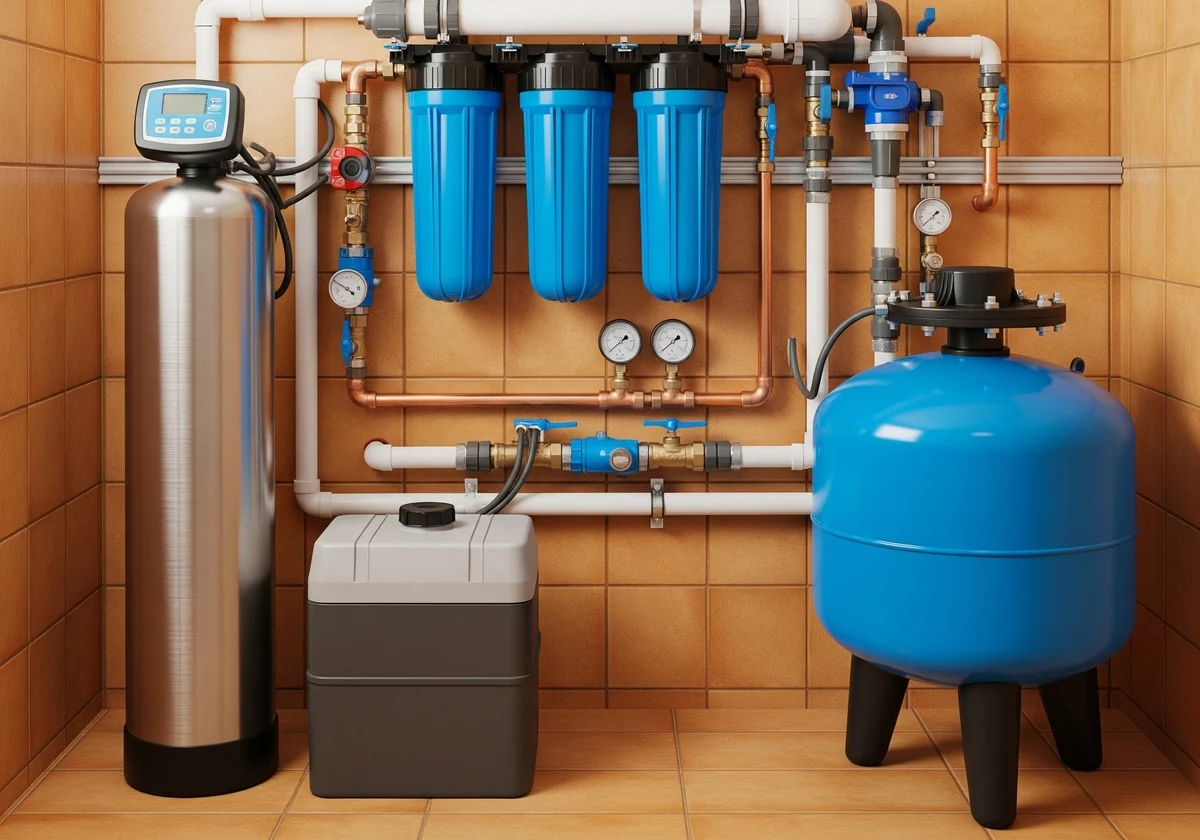
That’s where whole-home filtration can be useful. Instead of treating water only at one point of use, a whole-home approach addresses water as it enters the property, depending on the system design.
This can be particularly helpful when sediment, chlorine-related taste, or other treatable water-quality issues affect showers, laundry, bathrooms, and appliances as well as drinking water.
But bigger isn’t automatically better. A whole-home system should be sized according to household demand and designed around the water conditions. An undersized system may struggle with flow, while an unnecessarily complicated setup can increase maintenance without providing meaningful benefits.
The goal is consistency, not complexity.
Drinking Water May Need a Different Approach
There are times when the main concern is the water you drink rather than every gallon used around the house.
A point-of-use treatment system can make sense in that situation. These systems concentrate treatment where it matters most, often at a kitchen faucet or dedicated drinking-water tap.
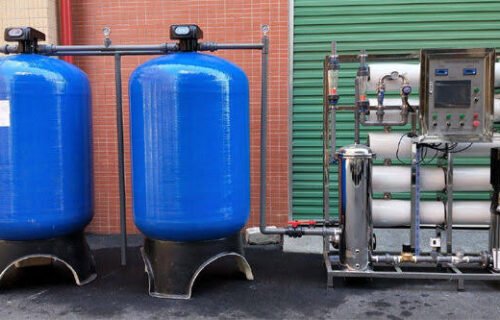
Reverse osmosis systems are one option homeowners consider when they want to reduce a broad range of dissolved substances from drinking water. Reverse osmosis uses a semipermeable membrane, usually alongside pre- and post-filtration stages, to produce treated water.
They can be highly effective for suitable applications, but they aren’t magic boxes. Filters and membranes need maintenance, and the system must be correctly sized and installed. Reverse osmosis can also produce a stream of reject water during operation, so efficiency is worth considering when comparing systems.
The important question isn’t whether reverse osmosis is “the best.” It’s whether it makes sense for your specific water and goals.
Don’t Ignore Water Pressure
Treatment equipment has to work with the home’s plumbing, not against it.
Filters and other components create some resistance to water flow. If the system isn’t properly sized, you may notice reduced pressure, particularly when several fixtures are being used at once.
Imagine someone taking a shower while the washing machine is filling and another person turns on the kitchen faucet. That’s when system capacity becomes very real.
Before installation, consider household size, peak water use, plumbing configuration, and the required flow rate. Professional sizing can help prevent the unpleasant surprise of installing a new treatment system and then wondering where all the water pressure went.
Maintenance Keeps the System Doing Its Job
A treatment system can be excellent and still perform poorly when maintenance is ignored.
Filters eventually become loaded with captured material. Membranes require replacement. Some systems need sanitation, cleaning, media replacement, or periodic adjustment. Components can also wear out.
It’s easy to postpone these tasks because the system doesn’t always fail suddenly. Performance may simply decline little by little. Taste changes. Flow drops. Scale starts appearing again.
Keeping a maintenance schedule is a simple habit that can prevent many of these headaches. Record filter changes and service visits, and follow the manufacturer’s recommendations for replacement intervals.
If you notice a sudden change, don’t immediately assume the equipment needs to be replaced. A clogged filter, incorrect setting, or plumbing issue may be all that’s wrong.
Think About Long-Term Value, Not Just Installation Cost
The cheapest system isn’t necessarily the least expensive over time.
Consider replacement filters, electricity or water consumption where applicable, service requirements, installation complexity, expected lifespan, and availability of replacement parts. A system that costs slightly more initially may be easier and cheaper to maintain over several years.
It’s also worth thinking about convenience. If changing a filter requires a complicated process that nobody in the household wants to deal with, maintenance is probably going to be neglected.
Good treatment should fit your lifestyle as well as your water.
Better Water Doesn’t Have to Be Complicated
Improving water quality isn’t about buying every piece of equipment available. It’s about understanding what needs attention and choosing technology that addresses it properly.
Start by noticing the clues. Test the water when appropriate. Decide whether treatment is needed at one faucet or throughout the home. Consider flow, maintenance, operating costs, and long-term support before making the final choice.
The result should be pleasantly uneventful.
Your drinking water tastes clean. Your shower doesn’t leave a layer of scale behind. Your fixtures stay easier to maintain. The filtration equipment quietly does its job in the background.
That’s really what good water treatment should feel like—not another complicated thing to worry about, but one less household problem on your list.