Making Your Home’s Water Work Better for Everyday Life
Water is used so often that we rarely stop to think about what it’s doing inside our homes. We drink it, cook with it, bathe in it, wash clothes with it, and send it through appliances every single day. So when the water starts leaving spots, tasting strange, or creating buildup around fixtures, the problem can become surprisingly annoying.
The good news is that household water problems are often manageable once you understand what’s causing them. The challenge is choosing treatment equipment based on your actual water rather than simply buying the first filter that looks promising.
A thoughtful approach can improve water quality while also protecting plumbing, appliances, and the little routines that make a house feel comfortable.
Every Home Has Different Water Needs
There isn’t one universal water treatment system that works perfectly for every household. Municipal water and private well water can have different characteristics, and even homes with similar water sources may have different concerns.
Some families mainly want better-tasting drinking water. Others are dealing with mineral buildup, sediment, chlorine, iron, or unpleasant odors. In some homes, several issues occur at once.
That’s why residential water treatment solutions should be selected around the condition of the water and the needs of the people living in the house. A system designed for a specific problem is generally more useful than a complicated setup that treats things you aren’t actually concerned about.
Start With a Water Test
It can be tempting to diagnose water by appearance alone. If it looks clear, surely it’s fine, right?
Not necessarily.
Many substances dissolved in water are invisible. Testing can provide useful information about hardness, pH, iron, manganese, chlorine, and other characteristics. More specialized testing may be appropriate if there are concerns about particular contaminants.
Testing also helps prevent over-treatment. Nobody wants to spend money installing equipment that doesn’t address the actual issue.
Think of it as taking a snapshot of your water. Once you know what you’re looking at, choosing the next step becomes much easier.
Hard Water Has a Way of Making Itself Known
Hard water is one of the most common household complaints. You may notice white deposits around faucets, scale inside a kettle, spots on shower glass, or soap that doesn’t seem to rinse away quite as easily.
water softeners are designed to reduce the minerals responsible for water hardness, particularly calcium and magnesium. Traditional ion-exchange softeners replace hardness ions with sodium or potassium ions, helping reduce scale throughout the plumbing system.
The benefit can extend beyond appearance. Reducing hardness may help limit mineral accumulation in water-using appliances and fixtures.
Still, not every home needs a softener. The sensible approach is to test the water first and consider how much hardness is actually affecting your household.
Drinking Water Often Deserves Its Own Treatment
Whole-home treatment and drinking-water treatment aren’t necessarily the same thing.
A homeowner may want to address hardness or sediment throughout the house while also wanting additional treatment for water used directly for drinking and cooking. That’s where point-of-use systems can become useful.
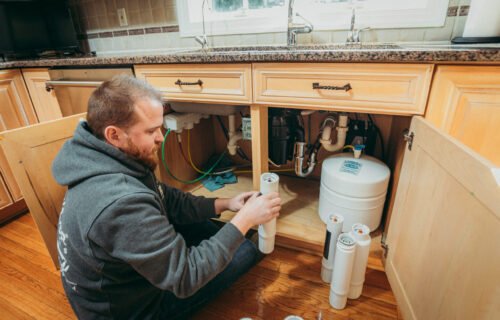
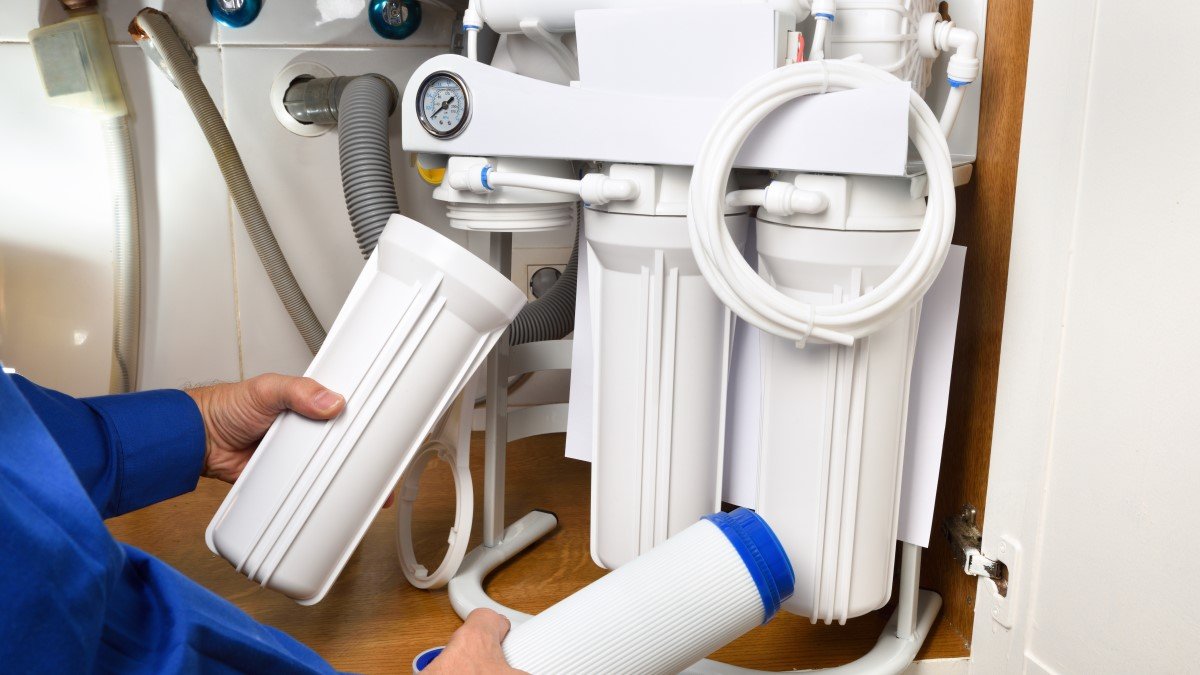
reverse osmosis drinking water systems are designed to push water through a semipermeable membrane, which can reduce a range of dissolved substances. Many systems also use pre- and post-filters to support the overall treatment process and improve taste.
Reverse osmosis can be an effective option, but it isn’t automatically the right answer for every household. System capacity, water pressure, wastewater production, filter replacement, and the contaminants being targeted should all be considered.
A good installation is one that fits the water and the household, not simply one with the longest list of features.
Filtration Can Improve Everyday Water Quality
Filtration is another broad category, and it covers a surprisingly wide range of technologies.
Carbon filters, for instance, are often used to reduce chlorine taste and odor. Sediment filters can capture particles before they travel further into the plumbing system. More specialized media may target specific substances.
The important distinction is between filtration and purification. These words are sometimes used interchangeably in marketing, but they can describe very different processes.
Before purchasing a filter, check what it is actually designed to reduce. A cartridge that improves taste may not address hardness, and a sediment filter isn’t designed to remove every dissolved contaminant.
Knowing that difference can save both money and frustration.
Don’t Ignore Flow Rate
A treatment system can work well in a laboratory setting and still be a poor choice for a busy household if it isn’t sized correctly.
Imagine turning on the shower while someone starts the washing machine and another person opens a kitchen faucet. That’s when system capacity becomes more than a technical specification.
Flow rate, pressure, household size, and peak water demand all deserve attention when selecting equipment. A professional installer can help determine whether a particular system is suitable for the home’s plumbing and expected usage.
Bigger isn’t always better, either. Oversized equipment may cost more without providing a meaningful benefit.
Maintenance Is Part of the Deal
Buying a water treatment system isn’t the end of the story. It’s the beginning of a maintenance routine.
Filters need replacing. Softener systems may need salt or other servicing. Reverse osmosis membranes have a service life. Storage tanks, valves, and connections may need periodic inspection.
Skipping maintenance can reduce performance and, in some cases, create new problems. A filter that’s well past its recommended service interval shouldn’t be expected to perform like a fresh one.
The easiest solution is to keep a simple maintenance schedule. Write down installation dates, filter changes, and service visits. It takes only a few minutes and can prevent the classic “When was that filter supposed to be changed?” moment.
Consider the Cost Over Several Years
Initial purchase price is important, but it isn’t the whole financial picture.
Look at replacement filters, treatment media, salt, electricity, water usage, professional servicing, and potential repairs. A system with a lower upfront price might become more expensive if its consumables need frequent replacement.
On the other hand, paying more doesn’t automatically guarantee better performance. The right comparison is based on value and suitability.
Ask what the system will require over three, five, or even ten years. That perspective often changes the buying decision.
Professional Installation Can Make a Difference
Water treatment equipment involves plumbing, pressure, flow, drainage, and sometimes electrical connections. Proper installation matters because even excellent equipment can perform poorly when incorrectly sized or configured.
A knowledgeable installer should be able to explain why a particular system is being recommended, what it will treat, and what maintenance it will need.
Be cautious of anyone who immediately recommends expensive equipment without asking about your water quality or household needs. Good treatment starts with questions.
Better Water Is About More Than Technology
The goal of water treatment isn’t to turn your home into a laboratory. It’s to make everyday water cleaner, more pleasant, and better suited to your household.
Maybe that means reducing mineral scale. Maybe it means improving drinking water. Perhaps your biggest concern is an unpleasant taste or sediment.
Whatever the reason, start with the problem rather than the product. Test the water, understand the available treatment methods, consider long-term maintenance, and choose equipment that fits your actual needs.
When the right system is installed and properly maintained, water treatment becomes something you barely notice. The shower feels better. The glass of water tastes better. The fixtures stay cleaner. And the plumbing gets a little less abuse from whatever is coming through the pipes.
Sometimes, that quiet improvement is the best result of all.