Simple Ways to Keep Hard Water From Taking Over Your Home
There’s nothing dramatic about hard water. It doesn’t usually arrive with a warning or make some obvious announcement. Instead, it quietly leaves little reminders around the house—a cloudy glass, a crusty showerhead, white marks around the faucet, or laundry that never quite feels as soft as you’d like.
Over time, those little annoyances can become a routine. You clean the same spots again. You replace a fixture. You wonder why the dishwasher isn’t getting things as clean as it used to.
The good news is that hard water problems are manageable once you understand what’s causing them. A little testing, sensible equipment, and regular maintenance can go a long way.
First, Understand What Hard Water Actually Means
Hard water contains higher concentrations of naturally occurring minerals, especially calcium and magnesium. These minerals aren’t automatically a sign that your water is unsafe. The issue is more about how they behave throughout your plumbing and household.
When hard water is heated or evaporates, minerals can remain behind. That’s why you may notice deposits around sinks, shower fixtures, and appliances that use hot water.
The severity varies from one home to another. Water sources differ, and so do mineral concentrations. That’s why assuming your water is hard simply because someone nearby has the same problem isn’t always accurate.
Testing gives you a clearer answer.
Look for the Everyday Clues
Sometimes your house gives you plenty of hints.
If soap doesn’t seem to lather properly, glassware comes out of the dishwasher with spots, or faucets develop chalky deposits, mineral hardness could be part of the problem.
Another common clue is frequent cleaning. If you’re constantly wiping white residue from fixtures, the water may be leaving behind more minerals than you’d prefer.
These signs aren’t a diagnosis by themselves, of course. Cleaning products, appliance settings, and plumbing conditions can also contribute. Still, they’re worth paying attention to, particularly when several appear together.
Why Water Softeners Can Help
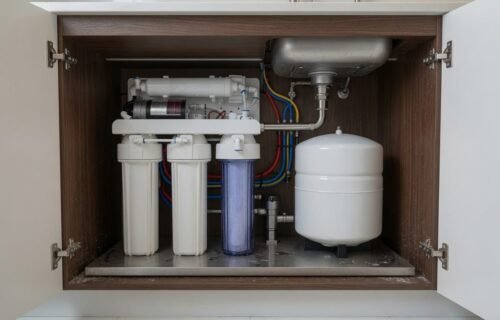
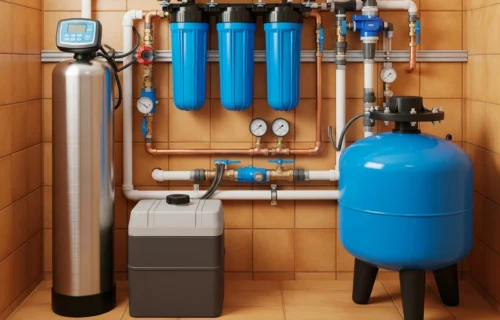
When testing confirms significant hardness, water softeners can be one way to reduce the amount of calcium and magnesium moving through the home’s plumbing.
Traditional salt-based softeners use an ion-exchange process to reduce hardness minerals. During normal operation, the system exchanges calcium and magnesium ions for sodium or potassium ions. The unit then regenerates periodically to restore its capacity.
Modern systems can be designed around household water usage, which may help improve efficiency.
But don’t choose a softener based solely on tank size or price. Water hardness, household size, daily water consumption, regeneration settings, installation requirements, and maintenance all matter.
A system that is correctly sized for the home is generally more useful than simply buying the biggest model available.
Scale Is the Part You Can Actually See
One reason hard water gets so frustrating is that its effects can become very visible.
The white residue around faucets and showerheads is often associated with mineral deposits. Inside appliances and plumbing, however, deposits may be much harder to spot.
Over time, scale buildup can affect water heaters, fixtures, and other water-using equipment. Heated water can encourage minerals to come out of solution and settle on surfaces.
A little buildup may be mostly cosmetic. Heavy accumulation can become a maintenance concern.
This is why preventing or managing hardness can be easier than constantly dealing with the aftermath.
Your Water Heater Deserves Attention
Water heaters are often forgotten until they stop working, which is not exactly the ideal time to think about maintenance.
Hard water can contribute to mineral deposits inside a water heater. These deposits may settle around heating elements or at the bottom of a tank, depending on the equipment and water conditions.
If your household has significant hardness, regular inspection and appropriate maintenance can help keep the heater operating properly.
The exact maintenance routine depends on the type of water heater you have. Manufacturer recommendations should always be the starting point.
Don’t Forget About Faucets and Shower Fixtures
You don’t need to be a plumbing expert to notice mineral deposits.
Showerheads may develop blocked openings. Faucet aerators can become restricted. Water flow may gradually change.
Cleaning can help remove existing deposits, but if the same problem keeps returning, it’s worth looking at the water itself.
A simple descaling routine may be enough for mild deposits. For persistent buildup, however, addressing the underlying hardness may make more sense than repeatedly cleaning the same fixture.
It’s the difference between treating the symptom and dealing with the source.
Laundry Can Be Affected, Too
Hard water can change the way detergents interact with water. Some households find that clothes feel less soft or that more detergent seems necessary to get the desired cleaning results.
Mineral-heavy water can also contribute to residue on fabrics over time.
If laundry seems unusually dull or stiff, don’t immediately blame the washing machine. Water conditions are another factor worth considering.
Of course, detergent type, washing temperature, machine settings, and fabric care all matter too. Household laundry is rarely a one-variable equation.
Consider the Bigger Picture
It’s easy to focus on one annoying faucet and forget that the same water is traveling through the rest of the house.
The water used for showers, laundry, dishwashing, and appliances comes from the same general supply. If hardness is significant, its effects may appear in several places.
That doesn’t necessarily mean every home needs a complicated whole-house treatment setup. It simply means the decision should consider how water is used throughout the property.
Testing can help determine whether a whole-home approach makes sense.
Maintenance Makes a Difference
Installing treatment equipment isn’t the finish line.
Softener systems need regular attention. Salt levels need to be monitored in traditional units. Filters, where applicable, require replacement. Components may need occasional inspection.
Neglecting these tasks can reduce performance, sometimes gradually enough that you don’t notice until the system isn’t doing much at all.
A calendar reminder every few months is a simple solution. Keep notes about service dates and replacement parts, too. It sounds overly organized until the day you’re trying to remember when you last changed a filter.
Better Water Doesn’t Need to Be Complicated
Hard water is one of those household issues that can feel bigger than it really is because you encounter its effects over and over again.
The sensible approach is to identify the level of hardness, understand how it’s affecting your home, and choose treatment accordingly.
You don’t necessarily need the most expensive system or a shelf full of specialty products. You need equipment that matches the water conditions and a maintenance routine you can realistically keep up with.
Once the right approach is in place, the improvement may show up in small ways: fewer mineral spots, easier cleaning, better-performing fixtures, and less time spent scrubbing deposits.
That’s really the goal. Not perfect water. Just water that works a little better for the people and appliances relying on it every day.